Science Check: You Can Fix Your Brain by Tom O'Bryan
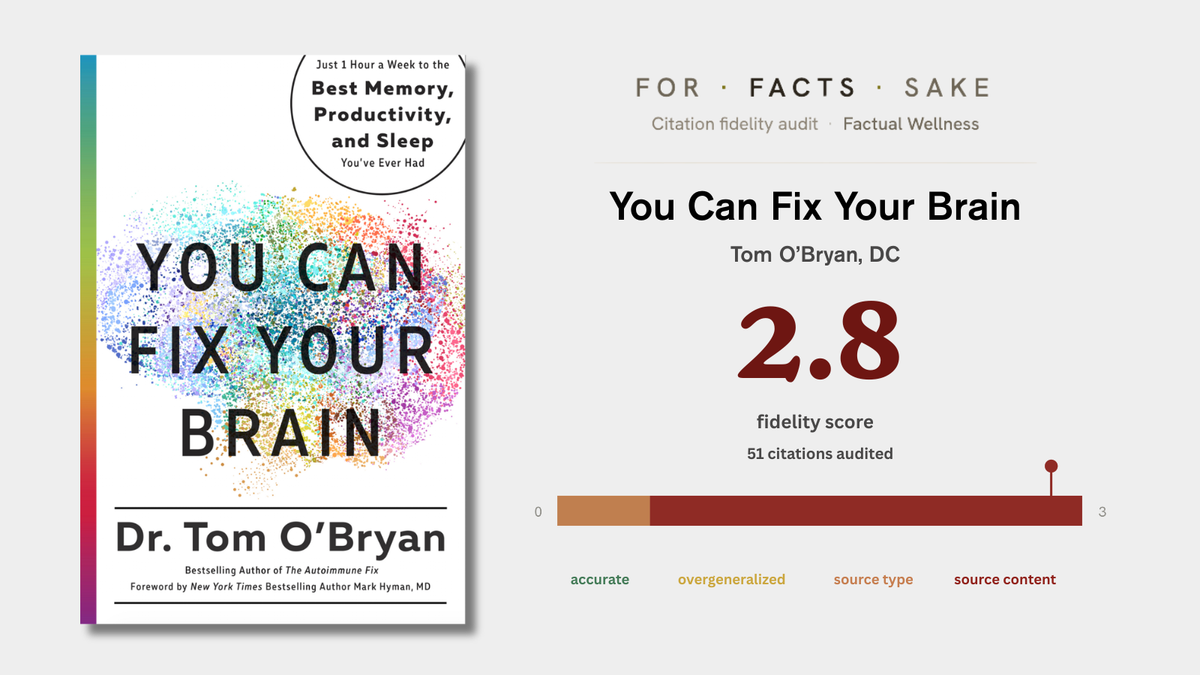
Number of citations checked: 51
Number of pages read: 68
Fidelity score: 2.8
Takeaway: Severe accuracy concerns with science translation and citation practices.
Summary
- The book makes plenty of bold claims that don't carry citations at all. For example, a page-and-a-half description of the body's "four different immune systems" and causation for Parkinson's and multiple sclerosis aren't backed by any references. (I searched externally and found no sources that could support the claims either.)
- The passages with citations are equally concerning. The book says that 99% of "all NFL players have severe, life-altering, and life-threatening inflammatory damage to the brain," and then says again, "Yes, 99 percent!"
- But the attached reference shows a very different picture: it was a study of 202 brains donated to scientific research. Of those, 111 had been NFL players, and 110 of them showed this damage. But that's not all NFL players ever.
- The book considers getting hit on the head from football and eating wheat/dairy to be equivalent sources of inflammation. (This is problematic both practically and scientifically.)
- Overall, this book plays fast and loose with its use of 'science' and facts.
Edition reviewed: You Can Fix Your Brain on Amazon Kindle
What does a book's fidelity score mean?
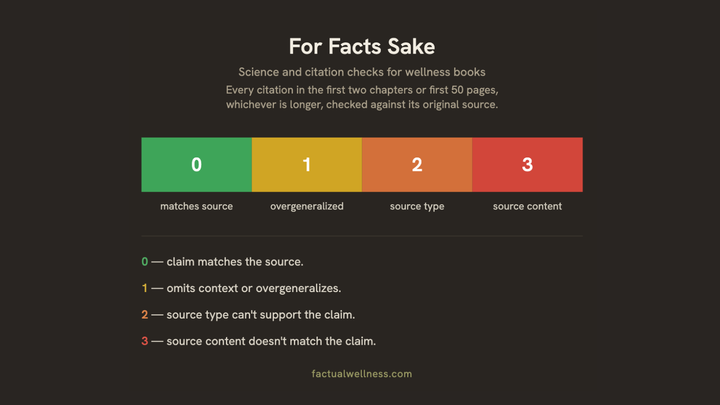
The fidelity score measures how faithfully the book translates the sources it cites.
- A fidelity score can tell you how the book translates what a given source actually says and whether the source type can support the claim it's attached to.
- It cannot tell you whether the underlying science is sound, whether the protocol works, or whether the book is overall trustworthy.
- It can show how a book uses the appearance of science to lend legitimacy to its program.
- It cannot show how many claims the book contains that should have been cited but weren't.
- These are not whole-book fact checks.
How the takeaway is scored
Fidelity scores range from 0 to 3.0. When it comes to how these books use science and research to support their claims, here’s the Factual Wellness ranking:
- 0.3 or less = generally accurate
- 0.4 – 1 = moderate accuracy concerns
- >1 = serious accuracy concerns
- 2+ = severe accuracy concerns
Comments ()