Science Check: Gut and Physiology Syndrome by Natasha Campbell-McBride

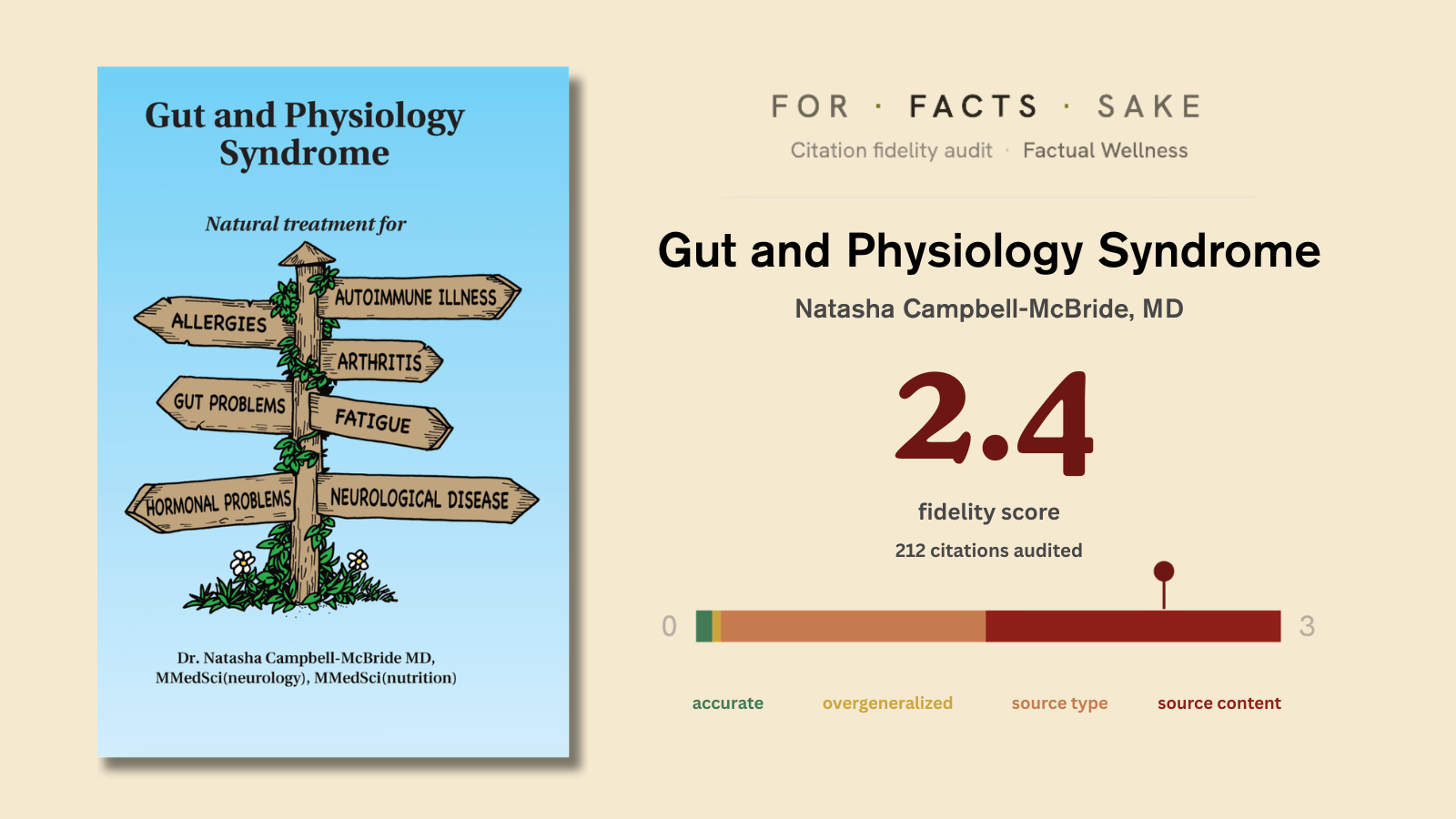
Number of citations checked: 212
Number of pages read: 50
Fidelity score: 2.4
Takeaway: Severe accuracy concerns for science translation and citation practices.
Summary
- This is a follow-up book by the creator of the GAPS diet.
- Most claims in the book are not supported (or are directly contradicted) by the sources it cites.
- For example, the book states that people who do not produce enough GABA are "prone to drug and alcohol abuse" (p. 28).
- However, the source was a small study (23 persons) and does not refer to "drugs" or "alcohol" at all. In fact, the study excluded anyone with a history of substance abuse disorder or substance dependence.
- This pattern appears frequently, with bold statements contradicted in a similar way by the very scientific evidence it uses.
Edition reviewed: Gut and Physiology Syndrome on Amazon Kindle
What does a book's fidelity score mean?
The fidelity score measures how faithfully the book translates the sources it cites.
- A fidelity score can tell you how the book translates what a given source actually says and whether the source type can support the claim it's attached to.
- It cannot tell you whether the underlying science is sound, whether the protocol works, or whether the book is overall trustworthy.
- It can show how a book uses the appearance of science to lend legitimacy to its program.
- It cannot show how many claims the book contains that should have been cited but weren't.
- These are not whole-book fact checks.
How the takeaway is scored
Fidelity scores range from 0 to 3.0. When it comes to how these books use science and research to support their claims, here’s the Factual Wellness ranking:
- 0.3 or less = generally accurate
- 0.4 – 1 = moderate accuracy concerns
- >1 = serious accuracy concerns
- 2+ = severe accuracy concerns