Science Check: Brain Maker by David Perlmutter

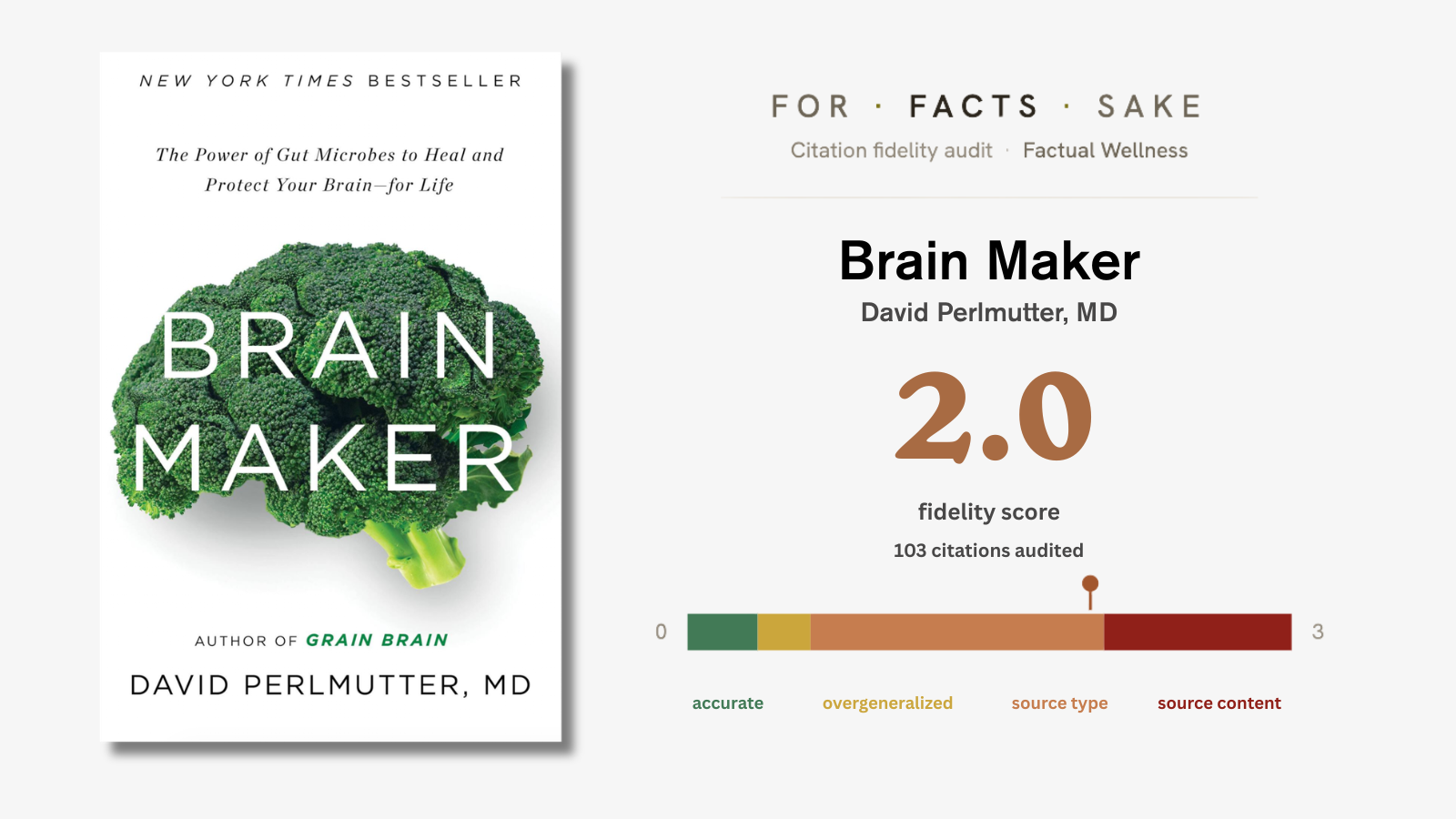
Number of citations checked: 103
Number of pages read: 70
Fidelity score: 2.0
Takeaway: Severe accuracy concerns with science translation and citation practices.
Summary
- The book mostly relies on non-scientific sources to make scientific claims (50 out of 103).
- Many citations directly contradict what was stated in the book (32 of 103; for example, saying that almost half of all adults have headaches monthly, when the source says at least one headache per year — clear mismatch, with the book painting a more severe picture).
- Overall, the book offers certainty that the evidence does not support, particularly in how it links diseases to environmental and gut-related causes.
Edition reviewed: Brain Maker on Amazon Kindle
What does a book's fidelity score mean?
The fidelity score measures how faithfully the book translates the sources it cites.
- A fidelity score can tell you how the book translates what a given source actually says and whether the source type can support the claim it's attached to.
- It cannot tell you whether the underlying science is sound, whether the protocol works, or whether the book is overall trustworthy.
- It can show how a book uses the appearance of science to lend legitimacy to its program.
- It cannot show how many claims the book contains that should have been cited but weren't.
- These are not whole-book fact checks.
How the takeaway is scored
Fidelity scores range from 0 to 3.0. When it comes to how these books use science and research to support their claims, here’s the Factual Wellness ranking:
- 0.3 or less = generally accurate
- 0.4 – 1 = moderate accuracy concerns
- >1 = serious accuracy concerns
- 2+ = severe accuracy concerns